



Hey there! As an enamel name badges supplier, I often get asked, "Do enamel name badges scratch easily?" It's a valid question, especially when you're shelling out cash for something that you want to last. So, let's dig into this topic and find out the real deal.
Understanding Enamel Name Badges
Enamel name badges are pretty cool. They're made by fusing powdered glass onto a metal base at super high temperatures. This process creates a hard, glossy surface that can showcase all sorts of designs, whether it's a company logo, a personal name, or a unique pattern.
The metal base can be made from different materials like zinc alloy, brass, or stainless steel. Each metal has its own properties, which can affect how the badge behaves in terms of scratching.
Factors That Determine Scratch Resistance
The Type of Enamel
There are two main types of enamel used in name badges: hard enamel and soft enamel.
Hard enamel is super dense and has a smooth, flat surface. The enamel fills the recessed areas of the metal and is then polished to a shiny finish. Because of its density, hard enamel is more scratch-resistant. It's like the tough guy of the enamel world, able to withstand a bit of rough and tumble without getting scratched up easily. For example, if you're going to be using the badge in a work environment where it might rub against things, like a factory or a construction site, a hard enamel badge could be a great choice.
On the other hand, soft enamel has a slightly raised texture. The enamel is not completely leveled out, which gives it a more dimensional look. While it looks pretty cool, soft enamel is a bit more prone to scratching. It's still durable, but you need to be a bit more careful with it. Maybe save a soft enamel badge for a less rough environment, like an office or a school.
The Metal Base
As I mentioned earlier, the metal base plays a role in scratch resistance.
Zinc alloy is a popular choice for enamel name badges. It's relatively inexpensive and easy to work with, which makes it a great option for mass-producing badges. However, zinc alloy is a bit softer than some other metals, so it might be more prone to scratching. But don't worry too much! If the badge is well-made and the enamel is thick enough, it can still hold up pretty well. You can check out our Cast Zinc Alloy Metal Badge to see how it looks.

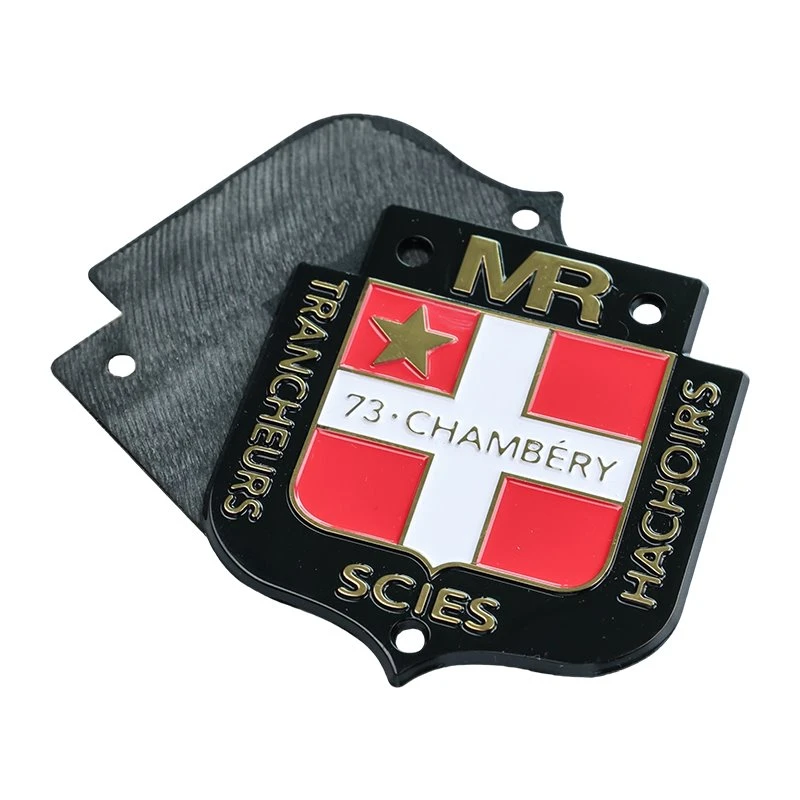
Brass is another common metal for badges. It's a bit harder than zinc alloy, so it offers better scratch resistance. Brass also has a nice golden color, which can give the badge a more elegant look. If you're looking for something a bit more high-end, a brass enamel badge might be the way to go.
Stainless steel is the toughest of the bunch. It's extremely resistant to scratching and corrosion, making it ideal for badges that will be used in harsh environments. However, stainless steel can be more expensive and a bit harder to work with, so it's not as commonly used for small name badges.
The Thickness of the Enamel
The thicker the enamel layer, the more resistant the badge will be to scratching. A thick layer of enamel acts as an extra buffer between the metal base and any potential scratches. When we're making our badges, we pay close attention to the enamel thickness to ensure that our customers get a durable product.
How to Prevent Scratches
Even though enamel name badges can be pretty durable, it's still a good idea to take some steps to prevent scratches.
Storage
When you're not wearing the badge, store it in a soft pouch or a jewelry box. This will protect it from rubbing against other objects and getting scratched. Avoid throwing it in a drawer with other metal items, as they can easily scratch the enamel.
Handling
Be gentle when handling the badge. Don't rub it against rough surfaces or use abrasive materials to clean it. If you need to clean the badge, use a soft cloth and a mild soap solution. Just gently wipe the badge to remove any dirt or smudges.
Usage
Think about where you're going to be wearing the badge. If you're going to be in a rough environment, like a workshop or a gym, consider taking the badge off. This will reduce the risk of it getting scratched or damaged.
Real-Life Examples
Let's take a look at some of our products and how they hold up in terms of scratching.
Our Metal Enamel World Football Badge is made with high-quality hard enamel and a zinc alloy base. It's designed to look great at football games and events. The hard enamel provides good scratch resistance, so you don't have to worry too much about it getting damaged if it accidentally rubs against something.
The Angling Club Badges are also quite durable. They're typically made with soft enamel, which gives them a nice, detailed look. While soft enamel is a bit more prone to scratching, we've made sure to use a thick layer of enamel to protect the badge. As long as you handle it gently, it should last for a long time.
The Soft PVC Spain Jersey Badge is a bit different. PVC is a bit softer than enamel, so it's more likely to get scratched. But it has its own unique look and feel. If you're a fan of the Spain jersey and want to add a cool badge to it, just be a bit careful with it to avoid scratches.
Our Badge Of Sports come in different materials and enamel types. Whether you choose a hard enamel or a soft enamel badge, you can be assured that we've made them to be as durable as possible. Just follow the tips I mentioned earlier to keep them looking great.
Conclusion
So, do enamel name badges scratch easily? Well, it depends on a few factors like the type of enamel, the metal base, and the thickness of the enamel. Hard enamel badges are generally more scratch-resistant than soft enamel badges, and badges with a harder metal base like brass or stainless steel will also hold up better. But with proper care and handling, you can minimize the risk of scratches and keep your enamel name badges looking great for a long time.
If you're interested in purchasing enamel name badges for your company, club, or personal use, I'd love to have a chat with you. We can discuss your design ideas, the materials you prefer, and get you a quote. Don't hesitate to reach out and let's start creating some amazing badges together!
References
- Smith, J. (2023). The Art of Enamel Badge Making. Crafts Publishing.
- Brown, A. (2022). Durability of Metal Alloys in Badge Manufacturing. Metalworking Journal.


