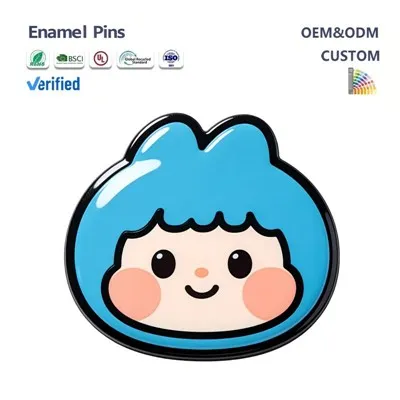

You know, when it comes to die - cast pins, one of the most frequently asked questions I get as a die - cast pins supplier is, "Do enameled die - cast pins look different from non - enameled ones?" Well, let me tell you, the answer is a resounding yes! And in this blog, I'm gonna break down all the ways these two types of pins differ in appearance.
Surface Finish
First off, let's talk about the surface finish. Non - enameled die - cast pins have a raw, metallic look. The metal is exposed, and you can clearly see the texture of the die - casting process. It might have a bit of a rough or grainy finish, depending on the quality of the casting and the type of metal used. For example, if it's made of zinc alloy, you'll notice a somewhat matte, industrial - looking surface.
On the other hand, enameled die - cast pins have a smooth and glossy finish. The enamel acts as a protective layer on top of the metal, giving it a polished and refined look. It's like the difference between a plain, uncoated piece of furniture and one that's been given a high - gloss paint job. The enamel can be applied in various colors, and it fills in all the little nooks and crannies of the pin design, creating a seamless appearance.
Color and Vibrancy
Color is another major differentiator. Non - enameled pins rely solely on the natural color of the metal. So, if it's a brass pin, it'll have that warm, golden - yellow hue. If it's nickel - plated, it'll be a bright, silver - like color. But the color options are pretty limited. You can't really get a wide range of vivid, custom colors with non - enameled pins.
Enameled pins, however, offer a world of color possibilities. You can have any color under the sun, from the soft pastels to the bold, neon shades. The enamel is mixed and applied in a way that allows for precise color matching. This means you can create pins that perfectly match your brand colors or any specific design you have in mind. For instance, if you want to create a Custom Die Cut Character Pin of your favorite cartoon character, you can use enamel to get the exact colors of their outfit, hair, and skin.
Details and Depth
The level of detail and depth you can achieve is also quite different between enameled and non - enameled pins. With non - enameled pins, the details are mainly defined by the raised or recessed parts of the die - cast design. While some intricate details can be achieved, they might not stand out as much because of the lack of color contrast and the flatness of the metal surface.
Enameled pins, though, can bring out the details like nothing else. The enamel can be used to highlight different parts of the design, creating a sense of depth. For example, if you have a Cartoon Enamel Pin with a character's face, you can use different colors of enamel for the eyes, nose, and mouth. This not only makes the details more visible but also gives the pin a three - dimensional look. The enamel can be applied to different levels, so you can have some parts of the design raised and others recessed, adding even more depth.
Durability and Appearance Over Time
When it comes to durability and how the pins look over time, there's a big difference too. Non - enameled pins are more prone to scratches and tarnishing. Since the metal is exposed, it can easily get scratched or dented. And depending on the metal, it might start to tarnish or corrode over time, especially if it's exposed to moisture or certain chemicals. This can make the pin look dull and worn out.


Enameled pins, on the other hand, are more resistant to scratches and tarnishing. The enamel acts as a protective barrier, shielding the metal underneath. As long as the enamel is applied correctly and the pin is taken care of, it'll keep its vibrant color and shiny finish for a long time. Of course, if the pin is subjected to extreme wear and tear, the enamel might chip, but overall, it's a more durable option in terms of appearance.
Types of Enamel and Their Impact on Appearance
There are two main types of enamel used in die - cast pins: soft enamel and hard enamel. Soft and Hard Enamel Pins each have their own unique effect on the appearance of the pin.
Soft enamel pins have a slightly textured surface. The enamel is filled into the recessed areas of the design and then polished down to a level that's just a bit below the surface of the metal border. This gives the pin a more matte look compared to hard enamel. You can still see the lines between the different enamel colors, which adds a bit of a hand - painted look and makes the design seem more rustic and charming.
Hard enamel pins, on the other hand, have a completely smooth and flush surface. The enamel is filled and then polished until it's level with the metal border, creating a seamless, high - gloss appearance. The colors are more vibrant and the details are crisper. Hard enamel pins are often used when you want a more professional and high - end look.
Design Flexibility
Enameled pins also offer more design flexibility than non - enameled ones. With enamel, you can create complex designs with multiple colors and fine details. You can use different techniques like gradient coloring, where the color gradually changes from one shade to another. This is not really possible with non - enameled pins, which are limited to the basic shapes and details created by the die - casting process.
For example, if you want to create a Custom Die - Cut Animal Enamel Pins with realistic fur colors or a detailed pattern on the animal's body, enamel is the way to go. You can layer different colors of enamel to create a more lifelike effect.
Usage and Aesthetic Appeal
The choice between enameled and non - enameled die - cast pins also depends on the intended usage and the aesthetic appeal you're going for. Non - enameled pins are great for a more minimalist, industrial look. They're often used in settings where a simple, metallic aesthetic is preferred, like some corporate or tech - related events.
Enameled pins, on the other hand, are more versatile in terms of aesthetic appeal. They can be used for a wide range of purposes, from promotional items for businesses to collectible pins for fans. Their bright colors and detailed designs make them stand out, whether they're being worn on a lapel or displayed on a pin board. Die Cast Lapel Pins are a popular choice, and enameled ones can really make a statement.
Conclusion
In conclusion, enameled die - cast pins look significantly different from non - enameled ones. The surface finish, color, details, durability, and design flexibility all set them apart. Enameled pins offer a wider range of colors, more detailed and vibrant designs, and better durability in terms of appearance. Whether you're looking for a simple, metallic pin or a colorful, eye - catching one, there's a die - cast pin option for you.
If you're interested in purchasing die - cast pins, whether they're enameled or non - enameled, I'd love to talk with you about your needs. We can work together to create the perfect pins for your brand, event, or collection. Don't hesitate to reach out for a quote and start the process of getting your custom - made die - cast pins.
References
- General knowledge about die - cast pins from years of experience as a supplier.
- Industry knowledge about metalworking and enamel application techniques.