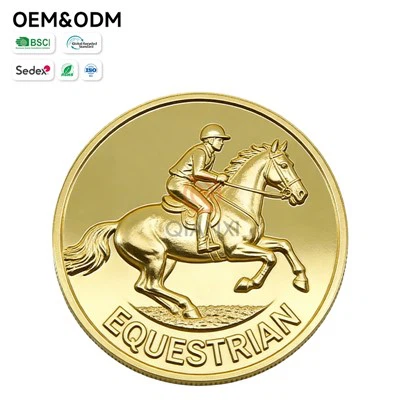
What is the difference between an Olympic medal and a world championship medal? Well, let me tell you, it's not just about the shiny metal they're made of. As a medals supplier, I've seen my fair share of these prestigious tokens, and there are some key differences that set them apart.
First off, let's talk about the significance. The Olympics are like the granddaddy of all sports events. It's a once - in - a - lifetime opportunity for athletes to represent their countries on a global stage. Winning an Olympic medal means you're not just the best in your sport at that time, but you're also a symbol of national pride. It's like the ultimate bragging right. For instance, when a sprinter wins an Olympic gold, it's not just about the individual's victory; it's a moment of celebration for an entire nation.
On the other hand, world championships are more focused on the sport itself. They're about determining the best in a particular discipline within a specific sport. These events are usually held more frequently than the Olympics, which happen every four years. So, while an Olympic medal is like the crown jewel, a world championship medal is a testament to an athlete's consistent excellence in their sport.
Now, onto the design. Olympic medals have a very strict and standardized design process. The International Olympic Committee (IOC) has specific rules about the size, shape, and materials used. The medals usually have the official Olympic logo on one side and a design that represents the host country on the other. For example, the Tokyo 2020 Olympic medals were made from recycled electronic devices, which was a really cool and eco - friendly touch.
World championship medals, however, can vary a lot more in design. Each sport's governing body has the freedom to come up with a design that reflects the spirit of their sport. Some might have the logo of the sport's governing body, while others could feature iconic symbols related to the sport. For example, a Badminton Silver Medal might have a shuttlecock or a badminton racket on it.
The materials used in these medals also differ. Olympic medals have to meet certain purity standards. Gold medals are actually made mostly of silver, with at least 6 grams of gold plating. Silver medals are made of pure silver, and bronze medals are made of copper.
World championship medals can use a wider range of materials. Depending on the sport and the budget of the event organizers, you might see medals made of different alloys, or even with special coatings. For example, an Epoxy Medal could be used for a smaller - scale world championship event.
In terms of the competition level, the Olympics attract athletes from all over the world, regardless of their ranking. It's a true melting pot of talent, and the competition is incredibly fierce. The selection process for athletes to represent their countries in the Olympics is also very strict, with many countries having their own qualifying events.
World championships are often more focused on the top - tier athletes in a sport. The qualifying process for world championships usually depends on an athlete's ranking in the sport. So, the competition is also intense, but it might be a bit more focused on the established stars of the sport.
Another aspect to consider is the media and public attention. The Olympics are a media frenzy. The whole world watches as athletes compete for glory. Winning an Olympic medal can catapult an athlete to international stardom overnight. They'll get endorsement deals, media appearances, and become household names.
World championships, while they do get a lot of attention from sports fans, don't have the same level of global media coverage as the Olympics. However, for fans of a particular sport, winning a world championship medal is just as important, if not more so, as it showcases an athlete's dominance in that specific discipline.
Now, let's talk about the value of these medals, not just in a financial sense but also in terms of what they represent. An Olympic medal is priceless in terms of the memories and the honor it brings. It's a symbol of hard work, dedication, and national pride. Financially, though, they can also be quite valuable, especially if they're from a historic Olympics.
World championship medals are also very valuable, but their value might be more closely tied to the sport and the athlete's achievements. For example, a medal from a major world championship in a popular sport could be worth a significant amount, especially if it's won by a well - known athlete. A 3rd Place Bronze from a high - profile world championship event could be a great addition to a sports memorabilia collection.


As a medals supplier, I understand the importance of getting these details right. Whether it's an Olympic - style medal or a world championship medal, we work hard to ensure that each medal is a perfect representation of the event and the achievement. We use high - quality materials and state - of - the - art manufacturing processes to create medals that not only look great but also stand the test of time.
If you're involved in organizing a sports event, whether it's a local tournament or a big - time world championship, we'd love to be your go - to medals supplier. We can help you design the perfect medals that will truly honor the achievements of the athletes. Just reach out to us, and we can start discussing your requirements and bring your vision to life.
References
- Olympic Charter: The official rules and regulations of the Olympic Games, which outline the standards for Olympic medals.
- Various sport governing body regulations: These documents provide details on the design and requirements for world championship medals in different sports.