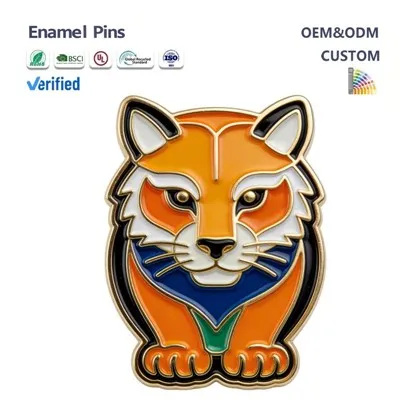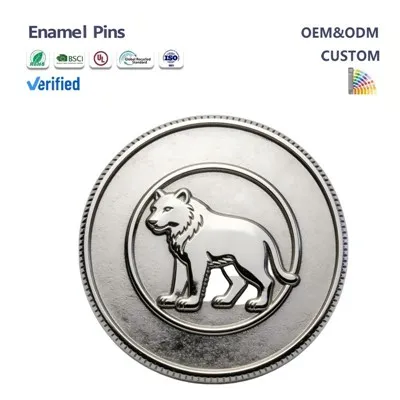
As global demand for custom branding products continues to grow, metal badges and enamel pins are becoming increasingly important across industries such as corporate branding, fashion retail, sports events, military supply, tourism, and promotional marketing. Recently, Ruijia completed another overseas shipment of custom metal badges for an international customer, highlighting the growing importance of precision manufacturing, surface finishing, and production consistency in the custom badge industry.


For many buyers, a badge may appear to be a simple product. In reality, high-quality badge manufacturing involves multiple technical processes, material decisions, and quality control stages that directly affect durability, appearance, and long-term customer satisfaction.
According to Ruijia, the company focuses on custom badge and metal craft manufacturing for global clients, offering OEM and ODM solutions supported by in-house production capabilities and export experience.
Why Material Selection Matters in Custom Badge Production
One of the most overlooked factors in badge manufacturing is the choice of base metal.
Different metals affect:
- Surface texture
- Plating adhesion
- Corrosion resistance
- Weight
- Color consistency
- Production cost
In the modern badge industry, the most commonly used materials include:
| Material | Industry Characteristics |
|---|---|
| Zinc Alloy | Ideal for 3D designs and die-casting |
| Iron | Cost-effective for stamped badges |
| Brass | Premium appearance and good polishing performance |
| Stainless Steel | Strong corrosion resistance |
| Aluminum | Lightweight and suitable for printed products |
For complex 3D custom badges, zinc alloy is widely preferred because it flows well during die casting and supports deeper mold details. This is especially important for military challenge coins, corporate emblems, and souvenir badges with layered textures.
The Technical Difference Between Soft Enamel and Hard Enamel
Many overseas buyers are unfamiliar with the production differences between soft enamel and hard enamel badges.
Soft Enamel Badges
Soft enamel badges feature recessed color areas with raised metal outlines. They are popular because they provide:
- Strong color contrast
- Good detail visibility
- Lower production costs
- Faster manufacturing cycles
Soft enamel is commonly used for promotional events, sports clubs, fashion accessories, and company branding projects.
Hard Enamel Badges
Hard enamel badges undergo additional polishing after enamel filling, creating a smooth and flat surface. Compared with soft enamel products, hard enamel badges offer:
- Higher scratch resistance
- More premium appearance
- Better long-term durability
- Improved wear resistance
Because of the extra polishing and firing stages, hard enamel production typically requires stricter quality control and more stable temperature management during manufacturing.
Surface Plating Is More Important Than Many Buyers Realize
Electroplating directly affects both appearance and corrosion resistance.
Professional badge factories usually offer finishes such as:
- Gold plating
- Nickel plating
- Black nickel
- Antique brass
- Antique copper
- Matte silver
- Dual-tone plating
However, plating quality depends heavily on pre-treatment processes.
Before electroplating, badge surfaces must undergo:
- Degreasing
- Polishing
- Acid activation
- Surface cleaning
- Conductive preparation
If these steps are poorly controlled, plating defects such as peeling, pinholes, oxidation, or uneven coloring may occur later during use.
According to industry manufacturing practices, stable electroplating requires controlled current density, solution purity, and plating thickness to maintain consistent finish quality across bulk production runs.
Why Mold Accuracy Determines Badge Quality
In custom badge manufacturing, mold precision is critical.
Low-precision molds often lead to:
- Blurred edges
- Inconsistent lettering
- Poor logo clarity
- Uneven metal flow
- Higher defect rates
Professional badge manufacturers usually rely on CNC engraving or precision mold carving to improve dimensional consistency.
At Ruijia About Us, the company highlights its factory production capabilities and experience in custom metal crafts manufacturing, which is especially important for large-volume OEM badge orders requiring consistent replication quality.
Quality Control During Bulk Badge Production
For overseas importers, one of the biggest concerns is consistency between samples and final production.

Professional badge factories typically inspect:
- Plating adhesion
- Color matching
- Enamel filling quality
- Surface scratches
- Pin attachment strength
- Packaging condition
Factories handling export orders also pay close attention to moisture protection during packaging because metal products can oxidize during long-distance ocean shipping if humidity control is insufficient.

This is why many badge manufacturers use:
- Individual poly bag packaging
- Anti-oxidation sealing
- Foam protection layers
- Carton reinforcement
- Moisture-proof export cartons
These details may seem small, but they significantly reduce damage rates during international transportation.
The Growing Demand for Custom Promotional Badges
Custom badges are no longer limited to traditional souvenir markets.
Today, they are widely used in:
- Fashion streetwear brands
- Anime and gaming merchandise
- Corporate employee recognition
- Trade show giveaways
- Sports tournaments
- Motorcycle clubs
- Music festivals
- Government and military projects
The growth of independent brands and online merchandising has also increased demand for low-MOQ custom badge manufacturing with faster lead times and flexible customization.
How Lead Time Is Managed in Professional Badge Factories
Many overseas buyers only focus on unit pricing, but delivery stability is often more important.
A professional custom badge supplier typically manages production through:
| Production Stage | Key Focus |
|---|---|
| Artwork confirmation | Avoid design errors |
| Mold production | Ensure detail accuracy |
| Die casting or stamping | Maintain shape consistency |
| Polishing | Improve surface smoothness |
| Enamel filling | Achieve color accuracy |
| Electroplating | Ensure corrosion resistance |
| Final QC | Reduce shipment defects |
Factories with integrated production systems usually achieve better schedule control because fewer outsourcing steps are involved.
Ruijia Continues Supporting Global Custom Badge Projects
As demand for customized branding products continues to expand, buyers are placing greater emphasis on production reliability, finish quality, and long-term supplier stability.
With experience in custom badge manufacturing, metal crafts production, and export packaging, Ruijia continues to support international customers looking for OEM and ODM badge solutions for promotional, retail, and corporate applications.
From material selection to plating control and shipment inspection, professional manufacturing processes remain one of the key factors behind high-quality custom badge production in today's competitive global market.