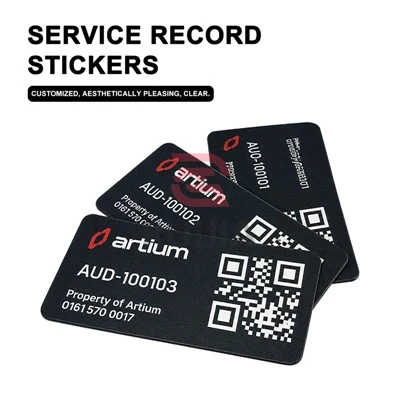
In modern electronics manufacturing, printed circuit boards (PCBs) undergo extreme thermal stress during surface-mount technology (SMT) assembly. Wave soldering, infrared reflow ovens, and lead-free solder processes subject components to temperatures frequently exceeding 260°C to 300°C. For industrial engineers and quality control managers, selecting the right barcode identification is critical. Standard paper or vinyl labels will char, curl, or fade instantly in these environments. High-temperature polyimide (PI) labels have become the industry gold standard for PCB tracking, offering unmatched thermal stability, chemical resistance, and barcode readability.
1. What makes polyimide labels withstand extreme reflow temperatures?
Polyimide is a polymer of imide monomers noted for its thermal stability and chemical resilience. Unlike standard polyester or vinyl films, PI film does not melt or soften at high temperatures. Instead, it maintains its structural integrity up to 350°C or higher for short durations during lead-free reflow cycles. The construction of an SMT-grade polyimide label typically consists of three layers:
• Face stock: A specially formulated thin polyimide film that resists shrinkage and curling.
• Adhesive: A high-performance silicone or high-tack acrylic adhesive that bonds securely to bare copper, FR4, or coated metal without outgassing.
• Topcoat: A thermal-transfer receptive coating designed to anchor resin ribbons firmly, preventing smudge and ensuring high contrast for 1D and 2D data matrix barcodes.
2. How do anti-static (ESD) PI labels protect sensitive electronic components?
Electrostatic discharge (ESD) is a major hazard in PCB manufacturing, capable of damaging sensitive microprocessors and semiconductor chips. When operators peel a standard plastic label from its liner, static charges exceeding thousands of volts can be generated. To solve this, advanced high-temperature polyimide labels incorporate static-dissipative face stocks and adhesives. These anti-static PI labels safely bleed off static charges during peeling and application, protecting static-sensitive devices (SSDs) throughout assembly, inspection, and testing.
3. Why is barcode readability essential for SMT traceability?
Traceability is paramount in electronics, automotive, and aerospace manufacturing. Each PCB requires a unique serial number or Data Matrix code to track component lots, manufacturing dates, and test results. If a label turns yellow, blisters, or loses ink contrast after passing through a multi-zone reflow oven, automated optical inspection (AOI) scanners will fail to read it. Ruijia's industrial polyimide labels are engineered to withstand flux washes, cleaning solvents (such as isopropyl alcohol and saponifiers), and thermal shocks while maintaining a grade A or B ANSI barcode scannability score.


4. Why partner with Ruijia for your industrial labeling and identification needs?
At Ruijia (oembadges.com), we specialize in delivering high-precision identification solutions for global B2B clients across electronics, automotive, machinery, and hardware sectors. Beyond specialized polyimide labels, our manufacturing portfolio encompasses durable metal nameplates, custom badges, precision name tags, and intricate metal crafts.
Our core advantages include:
• Strict Quality Control: Every production batch undergoes rigorous testing for thermal endurance, chemical exposure, and peel adhesion strength.
• Advanced Manufacturing Capabilities: We utilize precision die-cutting, laser etching, and high-speed rotary printing to ensure tight dimensional tolerances.
• Flexible OEM/ODM Services: We work closely with engineers and procurement teams to deliver custom sizes, pre-printed variable data, and specialized adhesive thicknesses tailored to unique application demands.
• Dedicated Global Support: Our experienced team ensures responsive communication, stable lead times, and reliable export packaging for clients worldwide.
Conclusion
Selecting the right high-temperature polyimide label prevents costly assembly failures and ensures uncompromised traceability across the electronics lifecycle. Whether you need ESD-safe PI labels for circuit board assembly or robust identification nameplates for industrial equipment, Ruijia offers dependable manufacturing expertise. Contact our engineering team today at oembadges.com to request material samples or discuss your custom project requirements.